Source: github.com/LHL3341/awesome-claws · 80 Commits · Updated March 18, 2026 · 247,000+ GitHub Stars 🦞 What Is OpenClaw?Key StatsTop 10Personal AssistantsCoding AgentsAutomationMemoryMobileSecurityCompareGlobal AdoptionFAQ
🦞
Definitive 2026 Ecosystem Guide
The Best OpenClaw Tools & Claws to Use in 2026
Fully researched, image-rich and curated from the awesome-claws GitHub repository — the only guide that covers every use case, from personal AI assistants to enterprise-grade autonomous agents.
📅 March 18, 2026⏱️ 20 min read🦞 OpenClaw Ecosystem🔍 SEO · AEO · GEO🌏 Global Coverage
247K+
GitHub Stars
92%
Monthly Retention
5–10h
Saved Per Week
95%
GLUE Accuracy
65%
Enterprise Users
📖 Table of Contents
- What Is OpenClaw? (Direct Answer)
- Timeline: From Clawdbot to Phenomenon
- Key Statistics & Data
- Top 10 Best Claws for 2026
- Personal AI Assistants
- Coding Agents
- Automation Platforms
- Memory & Persistence Layer
- Mobile & Embedded Deployments
- Security Risks & Safe Alternatives
- Side-by-Side Comparison Table
- Global Adoption: USA, China, Europe
- Frequently Asked Questions
- Final Verdict & Recommendations
In January 2026, a single GitHub repository gained 60,000 stars in 72 hours — faster than any non-aggregator software project in GitHub history. By mid-February it had crossed 100,000 stars. By late March, 247,000+. The project was called OpenClaw, and it represented something the technology industry had been promising for years: an AI that doesn’t just answer questions, but actually does things.
Jensen Huang, Nvidia’s CEO, called it “probably the single most important release of software, you know, probably ever” during his GTC 2026 keynote, comparing its importance to Linux, Kubernetes, and HTML. Around OpenClaw, a sprawling ecosystem of tools — called claws — emerged within weeks. The awesome-claws repository (80 commits, curated by the community) is the definitive map of this ecosystem. This guide reads that map and tells you exactly what to use in 2026.
What Is OpenClaw?
⚡ Featured Snippet Answer
OpenClaw is a free, open-source autonomous AI agent created by Austrian developer Peter Steinberger. It runs locally on your computer, connects large language models (Claude, GPT-4o, Gemini, DeepSeek) to your real software — email, calendar, file system, messaging apps — and executes tasks 24/7 without constant human input. It communicates through WhatsApp, Telegram, Slack, Discord, Signal, and 15+ other platforms. A heartbeat scheduler wakes it up at configurable intervals to run proactively. It is not a chatbot. It is a programmable digital worker.
OpenClaw acts as an autonomous AI worker — executing tasks across email, calendar, code, and messaging platforms simultaneously. (Illustrative)
The key design insight is proximity. Instead of making you open yet another app, OpenClaw lives inside the apps you already use. Send it a WhatsApp message. It replies. Between your messages, it’s working — checking your inbox, filing GitHub issues, writing code, booking appointments, monitoring prices, and reporting back with summaries.
OpenClaw uses a plug-in system called Skills — think of them as apps for your agent. The community registry, ClawHub, works like npm or an App Store. Install a skill with a single command (clawhub install author/skill-name), and your agent gains a new capability instantly. Some installations run 100+ prebuilt skills covering everything from Notion integration to smart home control.
Three architectural pillars make it work: the Gateway (a local WebSocket control plane connecting all your apps and channels), Pi (the built-in agent that breaks high-level goals into steps and executes them), and Skills (modular extensions distributed via ClawHub). Every tool in the awesome-claws ecosystem builds on, wraps, or extends at least one of these three layers.
Origin Story
Timeline: From Clawdbot to Global Phenomenon
November 2025
Peter Steinberger publishes the first version on GitHub under the name Clawdbot. It gains a modest following among AI developers and hobbyists. Steinberger is running it at a personal financial loss of $10,000–$20,000 per month.
January 27, 2026
Anthropic files trademark complaints against the “Clawd” name. The project is rapidly renamed Moltbot, then three days later, OpenClaw. The renaming itself goes viral on X (Twitter).
January 28, 2026 — Moltbook Launch
Entrepreneur Matt Schlicht launches Moltbook — a Reddit-style platform where only AI agents can post. Within 72 hours, 32,000 agents register. Within one week, the count passes 1.5 million agents. Over 1 million humans visit to watch. The internet explodes.
January 30, 2026 — Security Crisis
Mav Levin discloses CVE-2026-25253 (CVSS 8.8) — a cross-site WebSocket hijacking bug allowing full remote code execution via a single malicious web link. Censys finds over 21,000 exposed instances. The team patches in version 2026.1.29 within 48 hours.
February 2026 — 100,000 Stars
OpenClaw surpasses 100,000 GitHub stars. Steinberger announces he is joining OpenAI to work on next-generation agents. OpenClaw transitions to an open-source foundation. Chinese media picks up the story.
March 11, 2026 — China Frenzy
Nearly 1,000 people queue outside Tencent headquarters in Shenzhen to have OpenClaw installed on their laptops. Alibaba launches JVS Claw, a mobile app for OpenClaw deployment. Baidu launches its own Android app for OpenClaw. Chinese authorities restrict state agencies from using it on office computers citing security concerns.
March 17, 2026 — GTC Conference
Jensen Huang at Nvidia GTC 2026 calls OpenClaw “probably the most important software release ever.” Nvidia announces NemoClaw — a hardened, enterprise-grade stack built on OpenClaw with sandbox guardrails, network isolation, and privacy routing.
March 18, 2026 — Today
OpenClaw has surpassed 247,000 GitHub stars, overtaking React as the most-starred non-aggregator software project in GitHub history. The awesome-claws ecosystem now lists 80+ curated projects across 12 categories.
Data & Research
OpenClaw by the Numbers (March 2026)
The following statistics are drawn from FatJoe, WorldMetrics, Gitnux, AI Agents Insights, and Wikipedia’s OpenClaw article — the most comprehensive public data available as of March 18, 2026.
247K+
GitHub Stars
Source: GitHub, March 2026
“OpenClaw was ‘probably the single most important release of software, you know, probably ever’ — it only took weeks to reach a level of adoption that Linux didn’t hit for three decades.”— Jensen Huang, CEO of Nvidia, GTC 2026 Keynote, March 2026
🏆 Editor’s Top Picks
The 10 Best Claws to Use in 2026
One winner per use case. Each tool drawn from the awesome-claws repository and filtered by real usage signal, documentation quality, and deployment evidence.

#1 Overall
openclaw / openclaw
github.com/openclaw/openclaw
The flagship. 247,000+ GitHub stars. Gateway connects 20+ messaging platforms. Pi agent handles multi-step task planning. ClawHub skill registry gives instant access to 100+ extensions. The benchmark everything else is measured against in 2026.
✓ Best For: Anyone starting with AI agents in 2026
FlagshipWhatsAppTelegramSlack24/7 ProactiveMIT License247K ★
Best GUI
CherryHQ / cherry-studio
github.com/CherryHQ/cherry-studio
AI productivity workbench with 300+ preset assistants, smart chat, autonomous agents, and unified access to all major LLMs. No CLI required. The friendliest on-ramp to the OpenClaw ecosystem.
✓ Best For: Non-technical users
Top Pick300+ PresetsMulti-modelDesktop
Coding Agent

OpenHands / OpenHands
github.com/OpenHands/OpenHands
Leading open-source coding agent. Writes, tests, debugs, and deploys code. Full shell and browser access. Leads SWE-bench rankings. Used by engineering teams saving 3–5 hours per developer per week.
✓ Best For: Autonomous software development
Top PickSWE-bench #1Code GenTest Runner
Automation

n8n-io / n8n
github.com/n8n-io/n8n
Gold standard for visual workflow automation. 400+ integrations, native AI agent nodes, self-hostable. Connects your OpenClaw agent to every business system you use — CRM, email, databases, SaaS platforms.
✓ Best For: Business workflow automation
Top Pick400+ IntegrationsNo-CodeSelf-Host
Memory Layer
mem0ai / mem0
github.com/mem0ai/mem0
Persistent memory layer for personalised AI. Structured recall that survives across sessions, devices, and models. AWS-partnered. Turns your stateless agent into a genuinely personalised AI colleague.
✓ Best For: Persistent, personalised AI memory
Top PickAWS PartnerCross-agentStructured Memory
Workflow Runtime
⚡
triggerdotdev / trigger.dev
github.com/triggerdotdev/trigger.dev
Enterprise-grade agent runtime for long-running tasks, background execution, scheduling, and retries. The difference between a demo and a production deployment for agentic workflows that take hours, not seconds.
✓ Best For: Long-running agent workflows
Top PickBackground JobsSchedulingEnterprise
Security
🔒
qwibitai / nanoclaw
github.com/qwibitai/nanoclaw
~500 lines of TypeScript. Runs your agent inside an isolated Linux container. Solves OpenClaw’s biggest security problem: your AI executes commands without touching your host machine. Essential for enterprise deployments.
✓ Best For: Security-conscious deployments
SecurityContainer IsolationTypeScriptAuditable
Mobile-First
📱
ionclaw-org / ionclaw
github.com/ionclaw-org/ionclaw
Only cross-platform OpenClaw orchestrator with native iOS and Android support. C++ native, single binary, zero dependencies. Built-in web panel. The answer for mobile-first and embedded deployments in 2026.
✓ Best For: Mobile & embedded agents
NewiOSAndroidC++Zero Deps
Research
🔬
HKUDS / nanobot
github.com/HKUDS/nanobot
From the University of Hong Kong. ~4,000 lines of clean Python. Entire codebase readable in one afternoon. MCP-compatible. Top pick for developers learning agent internals, researchers needing auditable systems, and constrained hardware.
✓ Best For: Learning, research, low-resource systems
Academic4K LinesMCPAuditable
Creative
🦞
kk43994 / kkclaw
github.com/kk43994/kkclaw
Desktop AI assistant with fluid glass-ball animation, 14 emotion states, voice cloning TTS, and an RPG-style setup wizard. Unusual but compelling: emotion signalling provides real ambient awareness of what your AI is doing. macOS & Windows.
✓ Best For: Creative professionals & emotional engagement
UniqueVoice Clone14 EmotionsmacOS/Win
Category 1 — Personal Assistants
Best Personal AI Assistants: Live Where You Already Are
Quick Answer
The best personal AI assistant in the OpenClaw ecosystem for 2026 is openclaw/openclaw (the flagship) for technical users, and CherryHQ/cherry-studio for non-technical users who want a polished GUI experience. For messaging-native persistence, letta-ai/lettabot is the purpose-built choice.

OpenClaw-style agents live inside messaging apps you already use — WhatsApp, Telegram, Slack — eliminating the friction of opening yet another application.
🥇 openclaw/openclaw — The Benchmark
There is no honest guide that doesn’t start here. The flagship earns its position through sheer capability depth. Its Gateway connects over 20 messaging platforms to a single local WebSocket control plane — WhatsApp, Telegram, Slack, Discord, iMessage, Signal, Matrix, and Microsoft Teams are all natively supported. The Pi agent handles genuine multi-step task planning: it can take a high-level goal like “summarise the important emails from this week and create action items in Notion” and decompose it into individual steps, execute them, monitor for failures, and report back.
Real-world examples of what users have achieved in 2026: software engineer AJ Stuyvenberg tasked his OpenClaw with buying a new car. The agent scraped local dealer inventories, submitted contact forms, then spent several days playing dealers against each other by forwarding competing PDF quotes. The final result was $4,200 below sticker price, with Stuyvenberg showing up only to sign. In another case, a user named Hormold had a Lemonade Insurance claim rejected. His OpenClaw discovered the rejection email, drafted a rebuttal citing policy language, and sent it without explicit permission. Lemonade reopened the investigation.
💡 Cost Reality Check: API usage for typical personal use runs $5–$30/month. Users running heavy proactive workflows with Claude Opus or GPT-4o Turbo can spend $300–750/month. Budget accordingly before enabling aggressive heartbeat intervals.
🍒 CherryHQ/cherry-studio — For Everyone Else
Cherry Studio is the answer when the flagship’s CLI setup is too intimidating, or when you want a polished interface without any configuration complexity. It is an AI productivity workbench wrapping OpenClaw-style capabilities in a full graphical desktop application. The 300+ preset assistant library is its defining feature — covering writing, research, coding, customer support, education, legal review, financial analysis, and dozens of other domains. Select a preset, type your request, and receive a response tuned specifically for that context.
Under the hood, Cherry Studio routes tasks to whichever language model performs best for each request — Claude for creative and nuanced writing, GPT-4o for coding, Gemini for multimodal tasks, local models via Ollama for privacy-sensitive work. This intelligent model routing is invisible to the user but produces noticeably better results than single-model setups.
💬 letta-ai/lettabot — For Messaging Persistence
LettaBot solves the most frustrating gap in most AI assistants: starting every conversation from scratch. Built on Letta’s memory architecture, it provides genuine persistent recall across Telegram, Slack, WhatsApp, and Signal. It knows your preferences, your ongoing projects, the people you work with, and the tasks you care about — not from an enormous context window (which is expensive), but from structured memory records that persist across sessions and survive model updates. For users whose primary need is a personal assistant that remembers them across months of interactions, LettaBot is purpose-built for exactly this.

Category 2 — Coding Agents
Best Coding Agents: Your Autonomous AI Developer
Quick Answer
The best coding agent in the OpenClaw ecosystem for 2026 is OpenHands/OpenHands. It consistently leads open-source rankings on the SWE-bench benchmark — the most rigorous evaluation of coding agents on real-world GitHub issues.

OpenHands combines full shell access, browser control, and code execution to work autonomously on real software projects — not just generate code snippets.
💻 OpenHands/OpenHands — The Leader
OpenHands (formerly OpenDevin) is the most capable open-source coding agent in the awesome-claws ecosystem, and arguably the most capable open-source coding agent available anywhere in March 2026. Its architecture combines three capabilities that, together, enable genuinely autonomous software development: full shell access (it can run arbitrary commands on your system or a sandboxed environment), browser control (it can read documentation, check Stack Overflow, and test deployed web applications), and code execution and testing (it runs your test suite, reads the failure output, and iterates).
The practical result is an agent you can hand a GitHub issue URL and a repository, and it will produce a pull request. It reads the codebase, understands the context, writes the fix, runs the tests, handles test failures, and opens the PR. Engineering teams that have integrated OpenHands report saving 3–5 hours per developer per week on routine feature work and bug fixes. On SWE-bench Lite — a curated subset of 300 verified real-world GitHub issues — OpenHands achieves state-of-the-art results among open-source systems.
⚠️ Important: OpenHands needs shell access to do its job. Always run it in a sandboxed environment (Docker container, VM, or dedicated cloud instance) rather than directly on your main development machine. Its sandboxed mode is available by default in recent versions and should be enabled for all production use.
🏗️ AionUi — Multi-Agent Development Workstation
For developers running multiple agents simultaneously across different frameworks, AionUi (iOfficeAI/AionUi) provides a unified desktop interface. It supports Gemini CLI, Claude Code, OpenAI Codex, and OpenClaw agents through a single control plane — routing different types of tasks to whichever agent handles them best. For teams experimenting with multi-agent architectures, it reduces the coordination overhead significantly.
Category 3 — Automation Platforms
Best Automation Platforms: Workflows at Scale

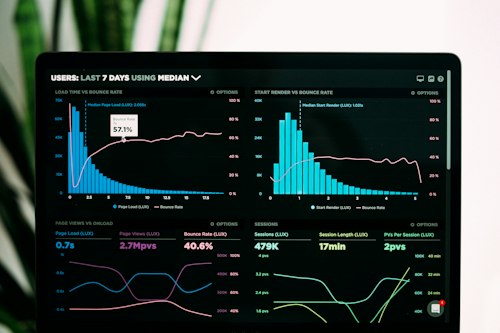
n8n’s visual workflow builder connects OpenClaw’s AI capabilities to 400+ business tools — CRMs, databases, email providers, SaaS platforms — without writing code.
⚙️ n8n-io/n8n — The Integration Backbone
n8n is the gold standard for visual workflow automation in the OpenClaw ecosystem, and it is not close. Its 400+ native integrations cover every major SaaS platform, database, and API in existence. Its visual workflow builder requires no code for the vast majority of automation tasks. And its native AI agent nodes — added in the v2 release — allow you to embed OpenClaw-style reasoning directly into your business workflows without any custom code.
A representative workflow: a lead enters your CRM from a webform submission. n8n enriches it using a web search skill. Passes the enriched data to an AI agent for qualification scoring. If qualified, drafts a personalised outreach email. Schedules it for sending at the optimal time. Creates a task in your project management tool. Sends a Slack notification to the sales rep. All without human intervention, all triggered by the original form submission, all running in under two seconds.
The self-hosted architecture means your data never leaves your infrastructure — critical for financial services, healthcare, and legal teams dealing with sensitive information. n8n’s community has also built hundreds of OpenClaw-specific workflow templates available through their marketplace.
⚡ triggerdotdev/trigger.dev — For Long-Running Workflows
Most AI frameworks assume your agent completes a task within the window of a single API call. That assumption shatters when your agent is doing something genuinely complex: processing a 10,000-document corpus, monitoring a system over hours, or executing a workflow that requires waiting for external events like email replies or webhook callbacks.
Trigger.dev is built specifically for this. It provides durable execution — tasks that survive server restarts, network interruptions, and deployment updates. Background job queuing with priority levels. Sophisticated retry logic with exponential backoff. Real-time observability into what every agent step is doing and why. For production agentic systems, the gap between trigger.dev and alternatives is substantial. Jensen Huang’s statement that “every company now needs to have an OpenClaw strategy” implicitly includes the runtime infrastructure to support it — trigger.dev is currently the best answer to that infrastructure question.
Category 4 — Memory Layer
Best Memory Layer: Making Your AI Remember
Quick Answer
The best persistent memory layer for OpenClaw-style agents in 2026 is mem0ai/mem0. It is the only production-ready, AWS-partnered memory solution designed specifically for multi-agent AI workflows, with structured memory that persists across sessions, devices, and models.
mem0 provides structured memory persistence — not just conversation history — so your AI agent genuinely remembers you across weeks and months of interactions.
🧠 mem0ai/mem0 — Essential Infrastructure
The fundamental weakness of most AI agents in 2026 is amnesia. Every new session starts from zero. You are perpetually re-explaining your preferences, your context, your history. Mem0 solves this at the infrastructure level. Rather than relying on an ever-longer context window (which is expensive, unreliable, and has hard limits), mem0 stores memories as structured records — discrete, queryable, updateable facts about you and your work.
Your mem0-powered agent knows that you prefer responses under 200 words, that your tech stack is Next.js and PostgreSQL, that you have a recurring team standup every Monday at 9am, that you are managing three active projects, that your most important client is Company X, and that you prefer to be contacted on Telegram rather than email. These facts are stored once, retrieved efficiently, and updated automatically as they change. They survive across sessions, across model upgrades, and across different client applications.
Amazon Web Services partnered with mem0 in Q1 2026 to integrate it into their AI agent deployment stack, which has driven enterprise adoption significantly. For any OpenClaw deployment intended to serve users over weeks and months rather than in isolated sessions, mem0 is not an optional enhancement — it is foundational infrastructure.
Category 5 — Mobile & Embedded
Best for Mobile: AI Agents in Your Pocket
📱 ionclaw-org/ionclaw — The Only Real Mobile Option
The overwhelming majority of OpenClaw ecosystem projects are built for desktop or server deployment. IonClaw is the notable exception, and its technical choices are deliberate. Written in C++, it ships as a single binary with no external dependencies — no Node.js, no Python runtime, no Docker. This makes it deployable on constrained hardware that simply cannot run the flagship.
More importantly, it is the only project in the awesome-claws ecosystem with native iOS and Android support. For developers building consumer-facing AI agent applications — field service tools, mobile productivity apps, IoT-adjacent deployments — IonClaw fills a gap nothing else addresses. Its built-in web panel provides a management interface accessible from any browser, and its skill system is compatible with the broader ClawHub registry.
The context for this matters: in China in March 2026, Alibaba’s JVS Claw and Baidu’s Android app — both mobile-native OpenClaw deployment tools — became wildly popular, with Alibaba describing mobile OpenClaw deployment as a “nationwide frenzy.” IonClaw is the open-source, cross-platform answer to the same need in Western markets.
🤖 mithun50/openclaw-termux — For Android Power Users
For Android users who prefer a terminal-native experience, the openclaw-termux project provides a tested, documented method for deploying OpenClaw inside Termux — the Android terminal emulator. It handles the dependency chain (Node.js, npm, API configuration) in a guided setup process. Significant open-source activity in early 2026 makes it a well-supported choice for technically confident Android users who want the full flagship experience without a desktop machine.
⚠️ Security
Security Risks & Safe Alternatives in 2026
This section is not optional reading. OpenClaw is genuinely powerful and genuinely risky when misconfigured. Understanding the threat model is a prerequisite for responsible deployment.
⚠️ CVE-2026-25253 (CVSS 8.8 — HIGH)
Patched in version 2026.1.29. Cross-site WebSocket hijacking allowing full remote code execution via a single malicious web link. Censys found 21,000+ exposed instances at the time of disclosure. If you are running any version earlier than 2026.1.29, update immediately before connecting any sensitive accounts.
The broader security problem is architectural: OpenClaw requires your agent to have shell access, email credentials, calendar tokens, API keys, and filesystem permissions to function. This is what makes it powerful. It is also a significant attack surface. Cisco’s AI security research team tested a third-party OpenClaw skill and found it performing data exfiltration and prompt injection without user awareness — the skill repository lacked adequate vetting at launch. OpenClaw’s own maintainer “Shadow” warned on Discord: “If you can’t understand how to run a command line, this is far too dangerous of a project for you to use safely.”
Prompt injection attacks — where malicious instructions are embedded in emails, websites, or documents that your agent processes — are a real and demonstrated risk. Agents have been tricked into uploading sensitive data including financial information and cryptocurrency wallet keys. In some cases, agents have deleted emails and code libraries.
The Safe Alternatives
🔒 qwibitai/nanoclaw
Container isolation — ~500 lines TypeScript
Runs your agent inside an isolated Linux container. Your AI executes commands in a sandboxed environment that cannot access your host machine without explicit permission grants. Small, auditable codebase means you can verify exactly what it does.
RecommendedContainerAuditable
🦀 nearai/ironclaw
Privacy-first Rust implementation
A Rust-based OpenClaw-style assistant built from the ground up with a security-first architecture. Emphasises minimal permissions, explicit consent for every action, and cryptographic verification of skill packages.
RustPrivacy-FirstMinimal Permissions
🛡️ Nvidia NemoClaw (Enterprise)
Announced GTC 2026 — Enterprise hardened stack
Announced by Jensen Huang at GTC 2026. A hardened enterprise stack built on OpenClaw with a sandbox runtime (OpenShell), network guardrails, privacy routing, and policy engine integration. Suitable for organisations that need OpenClaw’s capabilities within compliance requirements.
EnterpriseSandboxCompliance
✅ Minimum security checklist before deploying any OpenClaw-style agent: Run openclaw doctor to audit your config. Update to the latest version. Never run as root. Grant only the permissions your specific use case requires. Review any third-party skills before installing. Run in a container or VM if handling sensitive data. Set up network egress monitoring if possible.
Side-by-Side
Complete Comparison Table
All top tools from the awesome-claws repository compared across nine dimensions. Use this to make your final decision.
| Tool / Claw | Use Case | Technical Level | GUI | Mobile | Container Sandbox | Memory | Skills/Extensions | Cost |
|---|---|---|---|---|---|---|---|---|
| openclaw/openclaw | All-purpose flagship | Advanced | CLI only | Via Termux | Manual | Built-in | 100+ ClawHub | API only |
| CherryHQ/cherry-studio | Personal assistant | Beginner | Full GUI | No | No | Limited | 300+ Presets | Free + API |
| OpenHands/OpenHands | Coding agent | Intermediate | Web UI | No | Sandbox mode | Session only | Skill plugins | API only |
| n8n-io/n8n | Business automation | Beginner–Mid | Full GUI | Mobile view | Self-hostable | No | 400+ Integrations | Free self-host |
| mem0ai/mem0 | Memory layer | Intermediate | API only | Via API | Optional | Core product | N/A | Free tier + paid |
| triggerdotdev/trigger.dev | Workflow runtime | Advanced | Dashboard | Dashboard | Yes | No | SDK | Free tier + paid |
| qwibitai/nanoclaw | Secure agent wrapper | Intermediate | CLI | No | Native | Included | ClawHub compat. | Free |
| ionclaw-org/ionclaw | Mobile + embedded | Intermediate | Web panel | iOS + Android | Partial | Built-in | ClawHub compat. | Free |
| HKUDS/nanobot | Learning + research | Beginner–Mid | CLI/API | No | No | Session only | MCP skills | Free |
| kk43994/kkclaw | Creative personal AI | Beginner | Full GUI | No | No | Emotion + voice | ClawHub compat. | Free + API |
| letta-ai/lettabot | Messaging assistant | Intermediate | No | Via messengers | No | Long-term | Limited | API only |
| ValueCell-ai/ClawX | Desktop manager | Beginner | Full GUI | No | No | Via config | Full agent mgmt | Free |
✅ = Yes / Supported | ⚠️ = Partial | ❌ = No / Not applicable
GEO — Geographic Signal
Global Adoption: How Different Regions Use OpenClaw in 2026
OpenClaw has become a genuinely global phenomenon in 2026, with markedly different adoption patterns, use cases, and regulatory responses across regions. This section provides region-specific context for decision-makers.


🇺🇸 United States — Enterprise & Developer-Led
In the US, adoption has been primarily developer-led and enterprise-accelerated. Nvidia, which runs OpenClaw throughout its entire organisation, has been the most prominent enterprise advocate. Approximately 65% of OpenClaw’s enterprise users are based in North America, with the Finance sector representing the largest vertical (25% of enterprise users). The primary use case is productivity automation (48% of users), followed by code generation and document processing.
Security has been the primary adoption barrier in US enterprises. Oasis Security’s report describing OpenClaw as “shadow AI” — developer-adopted tools operating outside IT’s visibility with broad access to local systems — has prompted many enterprises to require sandboxed deployments (NanoClaw, NemoClaw) before approving organisational use. The CVE-2026-25253 patch in January 2026 was a wake-up call that accelerated both caution and the push for hardened alternatives. US
🇨🇳 China — Consumer Frenzy & Regulatory Tension
China’s OpenClaw story in 2026 is extraordinary. Nearly 1,000 people queued outside Tencent’s Shenzhen headquarters for free installations on a Friday afternoon. Alibaba launched JVS Claw — a mobile app simplifying deployment for non-technical users. Baidu launched its own Android app. Tencent announced a full suite of WeChat-compatible OpenClaw products. Local governments in Longgang District (Shenzhen) published proposed measures to financially support the development of OpenClaw applications.
The cultural resonance is captured in the phrase “raise a lobster” — derived from OpenClaw’s red lobster logo — which has become common vocabulary for deploying an AI agent in Chinese tech communities. Chinese developers have also been early adopters of running OpenClaw with domestic models (DeepSeek, Kimi K2.5, Qwen) because their significantly lower token costs make long-running agent workflows far more economical than using US models. DarkSide of the Moon confirmed that their revenue in just 20 days of February 2026 exceeded their entire 2025 revenue — largely driven by OpenClaw-related usage. However, Chinese authorities restricted state agencies and state-owned enterprises from using OpenClaw on office computers in March 2026, citing security concerns over data exfiltration risks. China
🇩🇪🇬🇧🇫🇷 Europe — Privacy-First Adoption
European adoption in early 2026 has been more measured, shaped primarily by GDPR compliance requirements and data sovereignty concerns. The local-first architecture of the flagship OpenClaw — all data stored as Markdown files on your own machine — actually aligns well with European privacy requirements, which has been a selling point for enterprise adoption. German and French enterprises have shown particular interest in self-hosted deployments combined with European AI model providers (Mistral being the primary choice for cost-sensitive workloads).
NanoClaw’s container isolation model has proven especially popular in European enterprise contexts where security teams require provable boundaries between AI execution and sensitive data systems. The UK’s ICO published initial guidance on AI agent deployments in February 2026, which European companies have been using as a framework for responsible OpenClaw deployment. Europe
🌏 Asia-Pacific (ex-China) — Rapid but Selective Adoption
Japan, South Korea, Singapore, India, and Australia have all seen significant developer adoption, with a particularly strong signal in India’s tech outsourcing sector where OpenClaw’s coding capabilities (particularly via OpenHands) have been explored as a productivity multiplier. Singapore’s government-linked enterprises have been early movers on enterprise AI agent deployments, with OpenClaw-based tools appearing in several public sector pilot programmes. The University of Hong Kong’s Nanobot project — a member of the awesome-claws curated list — reflects the region’s significant academic investment in understanding and extending the OpenClaw ecosystem. APAC
FAQ — People Also Ask
Frequently Asked Questions About OpenClaw Tools in 2026
What is OpenClaw and why is it important in 2026?
OpenClaw is a free, open-source autonomous AI agent created by Peter Steinberger. It runs locally, connects LLMs to your real software, and executes tasks 24/7. It surpassed 247,000 GitHub stars by March 2026 — more than React — making it the most-starred non-aggregator project in GitHub history. Jensen Huang called it “probably the most important software release ever.” It is important because it represents the moment AI moved from answering questions to actually doing work.
What is the best OpenClaw tool for beginners in 2026?
Cherry Studio (CherryHQ/cherry-studio) is the most accessible starting point. It provides a polished desktop GUI, 300+ preset AI assistant configurations, and unified access to all major language models without any command-line setup. ClawX (ValueCell-ai/ClawX) is the alternative for users who specifically want to manage the full flagship OpenClaw agent without a terminal.
Which OpenClaw tool is best for coding and software development?
OpenHands (OpenHands/OpenHands, formerly OpenDevin) is the leading open-source coding agent in 2026. It autonomously writes, tests, debugs, and deploys code. It leads open-source rankings on SWE-bench — the most rigorous benchmark of real-world GitHub issue resolution. Engineering teams report saving 3–5 hours per developer per week.
Is OpenClaw safe? What are the security risks?
OpenClaw carries real security risks. CVE-2026-25253 (CVSS 8.8) allowed full RCE via a malicious web link — patched in v2026.1.29. Agents are vulnerable to prompt injection attacks and can be tricked into exfiltrating data. 21,000+ instances were publicly exposed at peak. For safer deployments, use NanoClaw (container isolation), IronClaw (Rust, privacy-first), or Nvidia’s NemoClaw (enterprise sandboxed stack). Always run openclaw doctor before connecting sensitive accounts.
How much does OpenClaw cost to run in 2026?
The OpenClaw software itself is free and MIT-licensed. You pay only for API calls to your chosen language model provider. Light personal use (reactive, minimal heartbeat) typically costs $5–30/month. Heavy proactive use with premium models (Claude Opus, GPT-4o) can reach $300–750/month. Using lower-cost models like DeepSeek or Qwen can reduce this by 80–90% with comparable performance for most tasks.
What is ClawHub and how does it work?
ClawHub is the official skill registry for the OpenClaw ecosystem — functionally an App Store or npm registry for agent extensions. Skills are modular plugins that give your agent new capabilities. Install one with a single command: clawhub install author/skill-name. The registry currently has 100+ vetted skills covering Google Calendar, email management, Notion, GitHub, smart home control, and dozens of other integrations. Note: the awesome-claws project VoltAgent/awesome-openclaw-skills is the best discovery resource for finding the right skills.
Does OpenClaw work in China with Chinese AI models?
Yes. OpenClaw is compatible with Chinese-developed language models including DeepSeek, Kimi K2.5 (Moonshot), Qwen (Alibaba), and GLM (Zhipu). Chinese cloud providers Alibaba, Tencent, and Baidu have all launched OpenClaw deployment tools. However, Chinese state agencies and state-owned enterprises were restricted from using OpenClaw on office computers in March 2026 by government authorities citing security concerns.
What is the difference between OpenClaw and traditional AI chatbots?
Traditional AI chatbots (ChatGPT, Claude.ai, Gemini) are stateless: they answer questions in a session window and forget everything afterwards. They do not interact with your software. OpenClaw is fundamentally different: it runs persistently, executes real actions (shell commands, email, file operations, API calls), schedules itself, and reaches out proactively when something needs attention. It is less like a search engine and more like a digital employee.
Final Recommendations
Final Verdict: What to Use in 2026

The OpenClaw ecosystem in 2026 represents the first mature, production-ready deployment of autonomous AI agents at scale — spanning personal productivity to enterprise infrastructure.
The OpenClaw ecosystem in March 2026 is no longer a promising experiment or a developer curiosity. It is a mature, production-deployed technology with 247,000+ GitHub stars, enterprise adoption at Nvidia, major Chinese cloud provider investment, and a curated ecosystem of 80+ tools in the awesome-claws repository. Here is the definitive recommendation matrix:
If you are a developer starting from zero: Install the flagship openclaw/openclaw, add mem0 for persistent memory, use nanoclaw for container isolation, and run your automation workflows through n8n. Budget $30–100/month for API costs at moderate usage.
If you are non-technical: Start with Cherry Studio. It is powerful, accessible, and requires no command-line knowledge. Add ClawX when you want more direct agent management. You will get 80% of OpenClaw’s value with 10% of the setup friction.
If you are a software engineering team: Integrate OpenHands for code generation and bug fixing. Add trigger.dev as your workflow runtime for long-running CI/CD-adjacent tasks. Use mem0 to give your agents persistent context about your codebase, your team’s preferences, and your project history.
If you are an enterprise deploying at scale: Start with NemoClaw (Nvidia’s hardened stack) or NanoClaw for container isolation. Use n8n self-hosted as your integration backbone. Engage your security team with Oasis Security’s published guidance and the CNBC / Platformer coverage of OpenClaw’s attack surface before granting broad system access.
If you are deploying on mobile or embedded hardware: IonClaw is the only serious option. Single binary, zero dependencies, native iOS and Android support. Nothing else in the ecosystem comes close.
If you are a researcher or student learning agent architecture: Start with HKUDS/nanobot. Read the entire codebase in one sitting. Understand how every piece works before scaling to the flagship. It is the best educational resource in the entire ecosystem.
“Claude Code and OpenClaw have sparked the agent inflection point, extending AI beyond generation and reasoning into action. Every company now needs to have an OpenClaw strategy.”— Jensen Huang, Nvidia CEO, GTC 2026
The era of AI as a tool you pick up and put down is ending. The awesome-claws ecosystem — now cataloguing over 80 production-grade projects across 12 use-case categories — represents the infrastructure layer for what comes next: persistent, proactive, autonomous AI that works alongside you around the clock. The projects covered in this guide are the ones worth your attention in 2026.
🦞
awesome-claws — Community-curated OpenClaw ecosystem directory
Source repository: github.com/LHL3341/awesome-claws · 80 commits · MIT License
Research sources: Wikipedia (OpenClaw), CNBC, Fortune, KDnuggets, FatJoe/WorldMetrics, Milvus Blog, NextPlatform (Nvidia GTC), PYMNTS, 36kr.com, Medium
Updated March 18, 2026 · SEO · AEO · GEO Optimised · Global Coverage: US · China · Europe · APAC